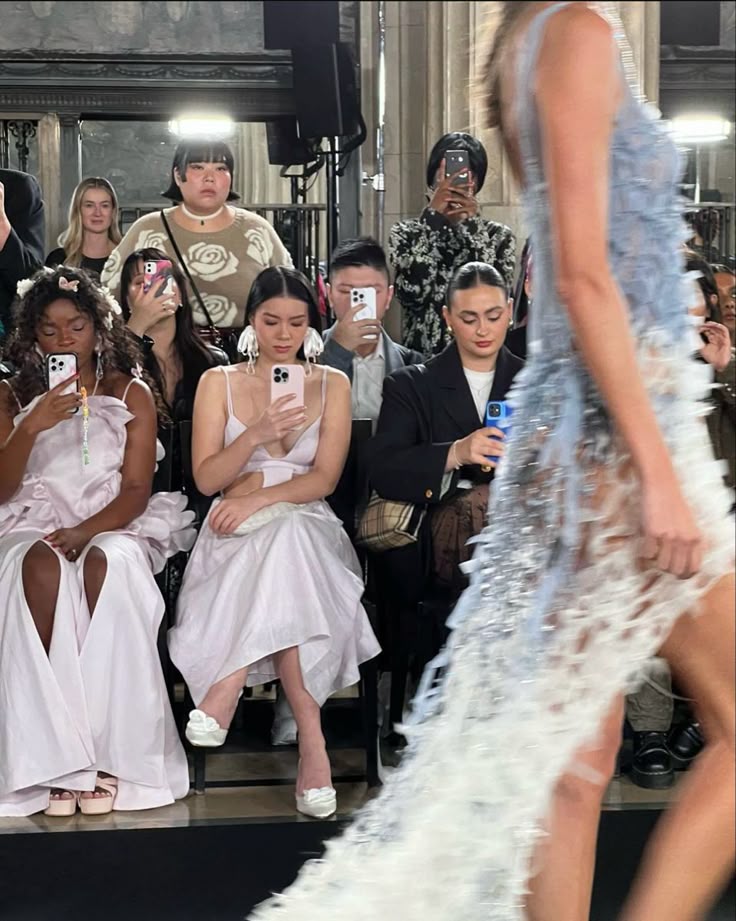
When we look at fashion today—especially the glossy world of fashion shows—it’s no longer just about the clothes or even the designers behind them. It’s about who’s in the front row, who got invited on the brand trip, who got gifted what, and how many followers they have. These days, it’s hard to scroll through fashion week coverage or even open a magazine without seeing a sea of influencers interviewing celebrities, sitting next to editors, and partnering with legacy fashion houses. At first glance, it seems like progress—fashion democratized. But the deeper I think about it, the more I wonder: is this wave of influencer marketing quietly diluting what fashion and fashion journalism once stood for?
To be clear, this isn’t a personal dig at influencers. Many of them work hard, have cultivated their aesthetics, and play a real role in shaping digital culture. But the industry’s overwhelming shift toward influencer-centric marketing has made fashion feel less about genuine expression and more like an endless loop of brand deals, affiliate links, and curated personas. Fashion has always been a spectacle, but now it’s a performance optimized for engagement, not artistic intent or critique.
What’s concerning is that this shift isn’t just changing what we see—it’s changing how we see. The constant push of sponsored content, curated outfits, and pre-scripted “unfiltered” moments makes it nearly impossible to separate real style from strategic influence. When every post is a soft ad and every reel has a promo code attached, authenticity gets buried under layers of performative styling. And while the goal used to be self-expression, now it’s often just conversion.
In this ecosystem, journalism has taken a hit too. Editorial critique, nuanced reviews, and deep-dive reporting are being replaced by micro-content and recap reels. Where once fashion journalism existed to probe, question, and contextualize trends and designers, now it often serves as a secondary echo to influencer coverage. It’s hard to speak critically when everyone is also trying to stay on the PR list.
Social media hasn’t just taken over fashion—it has redefined how we determine value in style. What’s trendy is now dictated by algorithms and virality, not by cultural shifts or individual subcultures. And the scariest part? Many people now build their personal style not from curiosity or experimentation, but from trends served up by For You pages and carousel hauls. The argument that “personal style isn’t personal anymore” doesn’t feel dramatic—it feels real.
I’ve noticed this even in my own consumption. My feed, once a space of discovery, now feels oversaturated with sameness. Every influencer seems to be advertising the same brands, styling the same pieces, and speaking the same aesthetic language. It’s become harder to find space to just be—to explore fashion without being sold something, to dress without asking, “Will this perform well online?”
There’s also a bigger economic shift here. Brands are no longer investing in traditional ad campaigns, thoughtful editorials, or even original campaigns with strong creative direction. Instead, they’re pouring that money into influencers, who are expected to generate conversions and reach. It’s efficient—but at what cost? The creative core of fashion is shrinking as its commercial side expands beyond recognition.
So, where do we go from here? Maybe the answer isn’t to cancel influencers or abandon social media altogether. Maybe it’s about reclaiming space—for slow fashion, for honest critique, for personal exploration outside of what’s trending. Maybe it’s about holding fashion to a higher standard again, asking it to be more than just clickable content. Because at the end of the day, fashion is supposed to reflect who we are—not who we’re told to be.
 ECIN
ECIN 
Leave a comment